
A few weeks ago, I did what some would say is unforgivable: I deleted Snapchat. To be completely honest, I was scared of the reactions from my friends, but breaking free of the virtual chains (A.K.A. my Snapchat streaks) felt liberating. Deleting Snapchat turned out to be a very healthy move for me, and I encourage everyone else to do the same. Most people who use Snapchat don’t just use it to have conversations with their friends, or post about their lives; they use it to keep “streaks.” Snapchat streaks are the propelling force in causing users to open the
Phones have become an essential part of our lives. From communicating with friends and family to using social media to getting the latest news alert from CNN, these devices buzz and ding incessantly. While phones are great at making us feel part of a wider world, they are also changing the way we interact with each other and may actually be isolating rather than connecting us. This is a worldwide problem, but on a smaller scale, it affects our day-to-day life at GDS. We’re all guilty of reaching for our phones at lunch instead of reaching out to our friends
The GDS high school’s 2018 Pride Week helped to promote a sense of pride among the LGBTQ+ community at GDS. But despite the atmosphere of inclusivity, a group of students felt left out. Did Pride Week leave many ‘closeted’ students feeling marginalized by the GDS acceptance movement? Events organized by GDS such as Pride Week certainly do a wonderful job of encouraging all, regardless of sexuality or gender identity, to participate. But for some, GDS holds the idea that school is a separate entity from the real world where students can safely be ‘out,’ without anyone on the outside knowing.
Mental health has long been a largely neglected topic within GDS. With the advent of groups such as LOVE and a resurfacing of criticisms over the lack of mental health education at GDS, the school is finally starting to devote attention to mental health awareness. However, the discussions surrounding this topic have failed to account for a significant portion of the study body. Students of color at GDS are further disadvantaged due to the added effects of stereotypes and problematic cultural norms that are often not understood by white peers and teachers. Therefore, as we begin thinking of ways to
In late April, renowned sexuality educator Shafia Zaloom came to GDS to lead a sex-ed workshop for each grade. For four days, each grade took their turn spending the day with Zaloom for what some have called a “crash course” on sexual education. While many have argued that the series of workshops was “too little, too late” of an attempt by GDS to make up for the lack of sex-ed in the current Physical Education and Health curriculum, it was ultimately a combination of the school and the students who diluted the value of the sex-ed workshops. As GDS students

In late November, a passionate group of GDS students and faculty attended a DC Board of Zoning Adjustment meeting to express their support for the plan to merge the two GDS campuses. The transfer of the campus to the empty lot will be a very practical and beneficial option, especially for parents who have children in different grade levels, but it will also be a large adjustment that both the GDS and Tenleytown communities will have to get used to. This current separation does not allow the younger and older members of the school to interact with each other and,
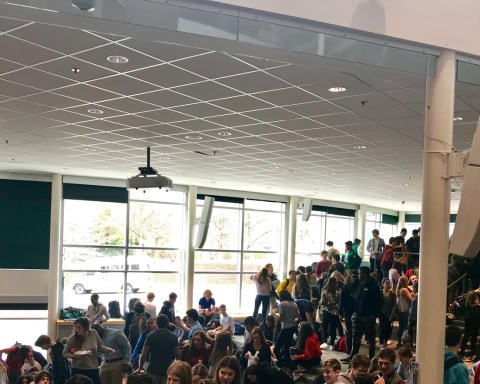
Taking place every Friday, assemblies are an integral part of GDS’s culture and mission. Assemblies present an opportunity for the community to both share experiences and exchange ideas without leaving the campus. While GDS offers a host of different assemblies each year, there are five core assemblies that occur annually: the Harvest assembly, the Christmas assembly, the Passover assembly, the MLK assembly, and the Pride assembly. The purpose of having an assembly is to expose students to different ideas. However, many students ditch assemblies because attendance is not taken. When a student misses an assembly, they could forego a potentially
This marks the first year the GDS high school did not hold traditional midterm exams. In a November letter to the GDS community, high school principal Katie Gibson wrote, “This change in our schedule will allow students and families to enjoy their winter breaks, with a firm end-date to the first semester falling prior to the departure for winter vacation. In addition, it allows us to add seven more teaching days to the calendar.” In the spring of last year, when Quinn Killy announced that GDS would not be holding midterms for the following school year, it seemed pretty surreal.
America has an undeniable obsession with celebrities. Thousands of news sites and magazines trace the movements of movie and TV stars, publishing them doing mundane activities like walking down the street and shopping for groceries. Our obsession with fame and famous people, however, does not need to—and should not—leak into our political system. Celebrities tend to be charismatic and know how to appeal to a specific audience, which is wonderful for a TV show in need of ratings, but not ideal for the chief executive of a diverse country. As junior Revati Mahurkar says, a “lot of [celebrities’] success depends
Every single GDS student knows a peer struggling with their mental health, whether or not they are aware of it. Although mental illnesses do not always have obvious physical manifestations, mental health issues can affect people in a variety of seen—or invisible–ways. Still, according to the National Alliance on Mental Illness, at least one in five high school students around the country battle with a mental health illness—and GDS students are no exception. While recent student-driven actions have begun to shed light on mental health issues in our community, the school itself needs to step up and meet its students
Violence can be very tempting, especially when those you are fighting against are spewing hate and intolerance. But more often than not, violence just makes things worse. It can cause the other side to use more violence, and further magnify the conflict. Right now, across our country, a group of anti-fascists who refer to themselves as Antifa have caved to the pull of violence. The political unrest in America right now is causing many people to join Antifa. The far-left group believes that the terrible and violent history of those on the far-right requires violence in order to stop them
How many times a day do you scroll through your Facebook feed? A Nielsen Company audience report found that adults in the United States spend over ten hours a day consuming media. Social media attracts the attention of an extremely wide age span, and is heavily integrated into our everyday lives through both personal and commercial use. As teenagers, many students at GDS use social media every day, and often personal opinions, such as political affiliations, can become a recurrent theme in one’s social media feed. It is another common theme on social media to get into arguments online with